

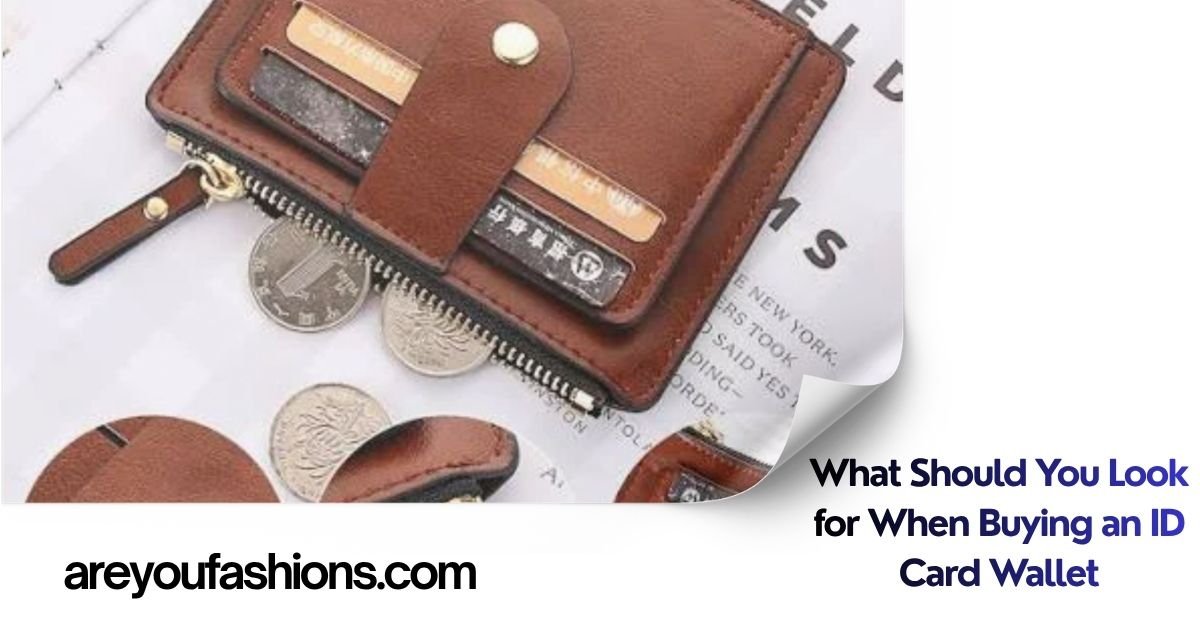
08 Sep What Should You Look for When Buying an ID Card Wallet?
An ID card wallet is a small, practical accessory designed to carry identification cards and other everyday cards in an organized and easy-to-reach way. While traditional wallets often hold cash, coins, credit cards, receipts, and identification, an ID card wallet focuses more closely on cards.
For many people in the United States, an ID card wallet can be useful for carrying a driver’s license, state identification card, work ID, school ID, health insurance card, transit card, membership cards, or payment cards. Some designs are simple card holders, while others include RFID-blocking materials, transparent ID windows, zippered sections, or small spaces for cash.
The right choice depends on what you carry, how often you use your identification, and how much protection and storage you need. A good ID card wallet should be convenient without becoming unnecessarily large or difficult to use.
This guide explains what an ID card wallet is, the different types available, important materials and features, privacy and security concerns, care instructions, and practical tips for choosing one.
What Is an ID Card Wallet?
An ID card wallet is a compact wallet or card holder made primarily to store identification cards and similar cards.
It may have one or more card slots, an ID window, a center pocket, or a small compartment for additional items. Some models are designed to carry only an ID card, while others can hold several cards.
Common items that may fit inside an ID card wallet include:
- Driver’s license
- State identification card
- Work identification
- Student ID
- Health insurance card
- Membership cards
- Transit cards
- Credit cards
- Debit cards
- Business cards
- Gift cards
- Emergency contact information
The main purpose is organization. Instead of searching through a large wallet, you can quickly access the card you need.
Why Use an ID Card Wallet?
A standard wallet can become crowded very quickly. Receipts, cash, payment cards, identification, and other items can make it bulky.
An ID card wallet offers a smaller alternative.
Easier Access to Identification
If you frequently need to show your ID, keeping it in a dedicated card holder can make access faster.
For example, you might use an ID card wallet when entering a workplace, checking into a hotel, traveling, attending an event, or making an age-restricted purchase.
Smaller Size
Many ID card wallets are much smaller than traditional bifold or trifold wallets.
This can make them comfortable for people who prefer carrying only essential cards.
Better Organization
A dedicated card holder can help separate important identification from less frequently used cards.
This can also make it easier to notice if a card is missing.
Less Clutter
A small wallet encourages you to carry only what you actually need.
This can reduce unnecessary receipts, old membership cards, expired cards, and other items that often accumulate in larger wallets.
ID Card Wallet vs. Traditional Wallet
The biggest difference is capacity.
A traditional wallet is usually designed for a combination of cash and cards. An ID card wallet is generally designed around cards.
| Feature | ID Card Wallet | Traditional Wallet |
| Main purpose | Carry IDs and cards | Carry cards, cash, and receipts |
| Size | Usually compact | Usually larger |
| Cash storage | Limited or none | Often available |
| Card capacity | Low to medium | Medium to high |
| ID access | Often quick | Depends on design |
| Minimalist use | Excellent | Moderate |
| Everyday flexibility | Depends on model | Usually high |
Neither option is automatically better. The best choice depends on your daily needs.
If you carry several cards and cash, a traditional wallet may be more practical. If you mainly carry an ID and a few cards, a compact ID card wallet may be a better fit.
Common Types of ID Card Wallets
ID card wallets come in many designs. Understanding the main types can help you choose one that matches your lifestyle.
1. Basic ID Card Holder
A basic ID card holder is designed to carry one or several cards.
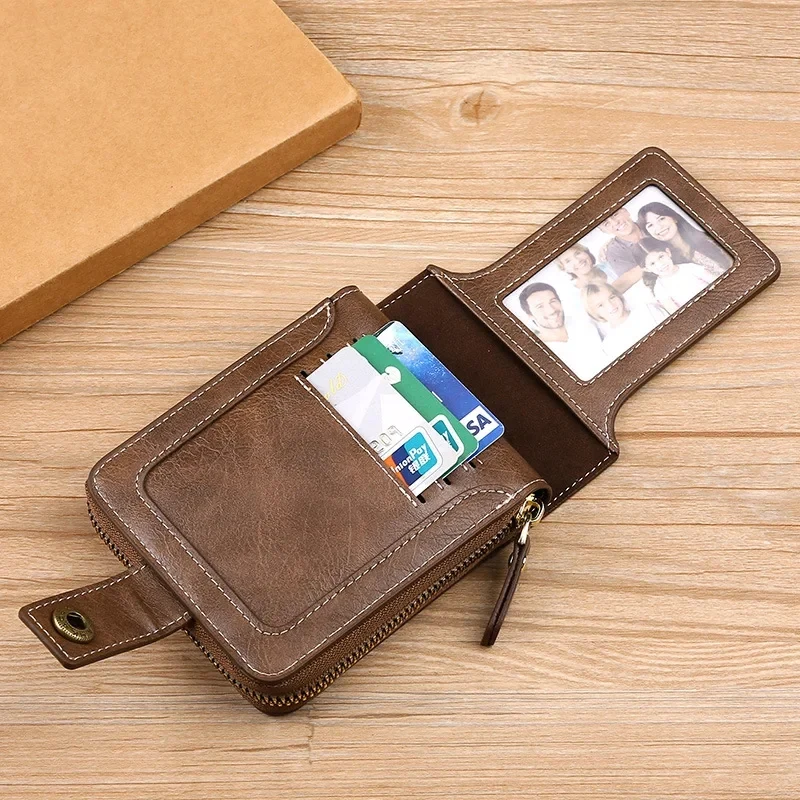
It may have a transparent window that allows you to display an identification card without removing it.
This type is popular for:
- Employees
- Students
- Travelers
- Event attendees
- People who carry minimal cards
It is usually lightweight and easy to store.
2. Bifold ID Card Wallet
A bifold ID card wallet folds in the middle.
It often has several card slots and may include a small cash compartment.
This is a good middle-ground option for people who want something compact but still need more storage.
3. Slim Card Wallet
A slim card wallet is designed to reduce bulk.
It may hold only a few cards and usually does not include a large cash section.
This design is useful for people who prefer a minimalist wallet.
4. RFID ID Card Wallet
An RFID wallet is made with materials intended to reduce certain types of radio-frequency communication between cards and nearby readers.
Some payment cards and identification cards contain contactless technology. RFID-blocking wallets are marketed as a way to reduce unauthorized wireless reading.
Also Read: Credit Card Holder for Women: The Complete Guide to Choosing the Right One
However, RFID protection is not a replacement for general financial and identity security.
You should still protect your cards, monitor financial accounts, use strong passwords, and report lost cards quickly.
5. ID Badge Holder
An ID badge holder is often designed for workplace or school identification.
Some include:
- Clear windows
- Lanyard attachments
- Clips
- Retractable badge reels
- Multiple card sections
These are especially useful when an ID must remain visible.
6. Zippered ID Card Wallet
A zippered design can help keep cards and small items contained.
Some models have enough room for:
- Identification
- Payment cards
- Keys
- Folded cash
- Small receipts
The tradeoff is that they can be slightly thicker than simple card holders.
7. Leather ID Card Wallet
Leather is a popular material because it can be durable and develop a distinctive appearance over time.
Leather wallets are available in many styles, from simple card sleeves to larger organizers.
The quality of leather can vary considerably, so the word “leather” alone does not tell you how durable a wallet will be.
8. Fabric or Nylon Card Wallet
Fabric and nylon wallets are often lightweight and flexible.
They can be a good choice for casual use, travel, outdoor activities, or people who do not want a leather product.
Some designs also use recycled or synthetic materials.
9. Metal Card Holder
Metal card holders are typically rigid and can offer a modern minimalist appearance.
They may protect cards from bending, but they can also be less flexible than fabric or leather wallets.
What Should You Carry in an ID Card Wallet?
The answer depends on your daily routine.
A simple everyday setup might include:
- Driver’s license or state ID
- One debit or credit card
- Health insurance card
- One emergency or membership card
If you frequently use public transportation, you may also carry a transit card.
If you use a workplace access card, you might keep that card in a separate badge holder instead of mixing it with your personal wallet.
Avoid carrying every card you own. A lost wallet becomes more difficult to replace when it contains many important cards.
How Many Cards Should an ID Card Wallet Hold?
There is no universal ideal number.
For a minimalist wallet, carrying three to five essential cards may be enough.
A larger ID card wallet might comfortably hold six to ten cards or more, depending on its construction.
However, maximum capacity is not always the best capacity.
When a wallet is overfilled, several problems can occur:
- Cards become difficult to remove.
- Slots may stretch.
- The wallet becomes bulky.
- Cards may bend.
- Seams can experience extra stress.
- The wallet may become uncomfortable in a pocket.
A useful rule is to choose a wallet that holds your normal number of cards without forcing them into the slots.
How to Choose the Best ID Card Wallet
Choosing an ID card wallet is easier when you focus on practical needs rather than appearance alone.
Consider Card Capacity
Start by counting the cards you actually carry.
If you normally carry two or three cards, a large wallet may be unnecessary.
If you carry eight or more, choose a design with enough independent slots.
Consider ID Visibility
If you regularly need to show your ID, a clear window may be useful.
An ID window lets you present the card without removing it.
However, a transparent window can also expose personal information. Consider whether your ID needs to remain visible throughout the day.
Check the Material
Common materials include:
- Leather
- Faux leather
- Nylon
- Polyester
- Canvas
- Aluminum
- Stainless steel
- Polycarbonate
- Other synthetic materials
Each has different characteristics.
Leather can feel premium and become more attractive with use. Nylon can be lightweight and flexible. Metal can be rigid and compact.
Look at Stitching and Construction
A wallet may look attractive but still have poor construction.
Check for:
- Clean stitching
- Strong seams
- Secure edges
- Smooth card slots
- Strong closures
- Durable hardware
A well-constructed simple wallet can last longer than a complicated wallet made with low-quality materials.
Think About Pocket Comfort
A wallet should fit comfortably where you normally carry it.
If you keep it in a front pocket, look for a thin design.
If you carry it in a bag, you may have more flexibility regarding size.
Consider Security Features
Depending on your needs, you might want:
- RFID-blocking material
- Zipper closure
- Snap closure
- Secure card slots
- Hidden compartments
Security features should be useful rather than added simply for marketing appeal.
What Is RFID Protection?
RFID stands for radio-frequency identification.
RFID technology can allow compatible cards or devices to communicate wirelessly with readers over short distances.
Some payment cards use contactless technology that relies on radio communication.
An RFID-blocking wallet uses materials designed to interfere with those radio signals.
Does Everyone Need an RFID Wallet?
Not necessarily.
RFID-blocking wallets can provide an additional layer of protection, but the actual risk varies depending on the cards you carry and their technology.
Good financial security involves more than a wallet.
Important habits include:
- Checking bank statements
- Turning on transaction alerts
- Reporting suspicious charges
- Using secure passwords
- Protecting account information
- Avoiding suspicious links
- Keeping identification documents secure
An RFID wallet should be viewed as one possible security feature, not complete identity protection.
ID Card Wallet Privacy Concerns
An ID card contains personal information.
For a U.S. driver’s license, this can include information such as your name, photograph, date of birth, and address information depending on the document and state.
Because of this, physical privacy matters.
Avoid Unnecessary ID Exposure
If you do not need to display your identification, consider keeping it inside the wallet rather than leaving it visible.
This is especially important in crowded public areas.
Be Careful With Photos of Your ID
Do not casually post pictures of your driver’s license, state ID, employee badge, or other identification online.
Even when some information is covered, enough details may remain visible to create privacy risks.
Avoid Sharing Personal Details
Your ID card wallet itself does not create identity theft, but losing a wallet can expose several pieces of personal information at once.
That is why limiting the number of important cards you carry can be a smart habit.
What to Do If You Lose Your ID Card Wallet
Losing a wallet can be stressful, but acting quickly can reduce potential problems.
First, determine exactly what was inside.
Then consider these steps:
- Retrace your recent locations.
- Contact the places you visited.
- Freeze or lock payment cards if appropriate.
- Report lost cards to the issuing organizations.
- Follow your state’s process for replacing a driver’s license or state ID.
- Monitor financial accounts for unusual activity.
- Replace access cards if a workplace or school ID was included.
- Consider additional identity-protection steps if sensitive documents were lost.
Do not wait several days if you believe your wallet was stolen.
ID Card Wallets and Identity Theft
A lost wallet does not automatically mean identity theft will occur.
However, identification and payment cards can contain information that criminals may try to misuse.
Risk can increase when a wallet contains:
- Government identification
- Credit cards
- Debit cards
- Insurance information
- Work credentials
- Membership information
- Personal notes containing sensitive details
Reducing the amount of sensitive information you carry is one practical way to limit the potential impact of loss.
ID Card Wallets for Travel
An ID card wallet can be useful when traveling within the United States.
You may use one for:
- Driver’s license
- Payment card
- Transit pass
- Hotel key card
- Travel membership card
For air travel, however, identification requirements can be different from everyday identification needs.
Travelers should check current requirements from official government or transportation sources before a trip, especially when flying.
For international travel, a passport is generally much more important than a standard ID card. A small card wallet can hold supporting cards, but it should not replace required travel documents.
ID Card Wallets for Work
Many workplaces use employee identification badges.
An employee ID may provide access to:
- Office buildings
- Computer systems
- Secure rooms
- Parking areas
- Cafeterias
- Employee services
A dedicated badge holder can make access easier.
If the card is used as an access credential, treat it as sensitive. Do not lend it to another person or leave it unattended.
Some organizations also prohibit employees from photographing or sharing security badges.
Always follow your employer’s security policies.
ID Card Wallets for Students
Students may carry:
- Student ID
- Library card
- Payment card
- Transit pass
- Campus access card
- Health insurance card
A slim student ID wallet can reduce the need to carry a large traditional wallet.
Students should also be careful with campus access cards. Losing one may create both inconvenience and a security issue.
Also Raed: How Do You Choose the Perfect Pink Wallet for Women?
ID Card Wallets for Seniors
A simple ID card wallet can be useful for older adults who prefer easy access to important cards.
A good design may include:
- Large, easy-to-use slots
- High-contrast materials
- Simple closures
- Easy-to-read organization
- A visible emergency contact section
Avoid making the wallet unnecessarily complicated.
The best design is one that is easy to open, easy to understand, and comfortable to carry.
ID Card Wallets for Minimalists
Minimalist wallets focus on carrying only essential items.
A minimalist ID card wallet may have:
- One ID slot
- Several card slots
- No coin section
- No large cash compartment
- A very thin profile
This style can be useful if most of your purchases are electronic and you rarely carry cash.
The goal is not to carry the fewest cards possible. The goal is to carry only what you actually use.
How to Organize an ID Card Wallet
Good organization makes a small wallet more useful.
One simple system is to put your most frequently used card in the easiest-to-reach slot.
For example:
Front section: driver’s license or state ID
Second section: primary payment card
Third section: health or insurance card
Back section: less frequently used cards
Avoid stacking too many cards into one slot.
If you regularly remove your ID, give it a dedicated location.
How to Clean an ID Card Wallet
Cleaning depends on the material.
Leather
Use products designed for the specific type of leather. Avoid soaking leather unless the manufacturer specifically says it is safe.
Keep leather away from excessive moisture and heat.
Nylon and Fabric
Many fabric wallets can be cleaned with a soft cloth and mild soap, but always check the manufacturer’s care instructions first.
Allow the wallet to dry naturally.
Metal
Metal surfaces can generally be wiped with a soft, slightly damp cloth.
Avoid harsh chemicals that could damage coatings or finishes.
Faux Leather
Synthetic leather can often be wiped clean with a damp cloth.
Avoid aggressive scrubbing because the surface coating may wear away.
How Long Does an ID Card Wallet Last?
There is no fixed lifespan.
A wallet’s durability depends on:
- Material
- Construction
- Frequency of use
- Number of cards
- Exposure to moisture
- Exposure to heat
- How often it is overfilled
A high-quality wallet used carefully may last for years.
A cheaper wallet that is constantly overloaded may wear out much sooner.
Signs that it may be time for replacement include:
- Broken stitching
- Torn card slots
- Loose lining
- Damaged closure
- Cracked material
- Cards falling out
- Excessive stretching
Common Mistakes When Buying an ID Card Wallet
Choosing a wallet based only on appearance is a common mistake.
Here are other issues to avoid.
Buying Too Much Capacity
A wallet with 20 card slots may seem useful, but unused space adds bulk.
Ignoring Card Fit
Some wallets have unusually tight or loose slots.
Your cards should fit securely without being difficult to remove.
Overlooking Closure Quality
A weak zipper, snap, or magnetic closure can reduce convenience and durability.
Carrying Too Many Cards
Even a high-capacity wallet can become uncomfortable when overloaded.
Assuming RFID Means Complete Security
RFID protection addresses a specific type of wireless communication. It does not prevent someone from stealing a physical card or using information obtained through other methods.
ID Card Wallet Safety Tips
A few simple habits can make your wallet safer to use.
Keep your wallet in a secure pocket or bag when you are in crowded places.
Do not leave it unattended in public.
Do not share photographs of your identification unless there is a legitimate reason.
Remove expired cards.
Keep emergency contact information separate from sensitive financial information when possible.
If a payment card is lost, contact the issuer promptly.
If a government ID is lost, follow the replacement instructions from the appropriate government agency.
Is a Digital ID Better Than a Physical ID Card Wallet?
Digital identification is becoming more common in some locations, but availability and acceptance vary.
A digital ID may allow a person to present identification using a smartphone or another supported device.
However, digital identification does not necessarily eliminate the need for a physical ID.
Phones can run out of battery, become damaged, or be unavailable. Some businesses, agencies, or transportation providers may also require a physical document.
For this reason, people should understand where a digital ID is accepted before relying on it.
Physical ID Cards vs. Digital Wallets
Digital wallets and physical ID card wallets serve different purposes.
A digital wallet can store payment cards and, in some cases, supported identification credentials.
A physical wallet does not require battery power or an internet connection.
| Consideration | Physical ID Wallet | Digital Wallet |
| Battery required | No | Usually yes |
| Physical card required | Yes | Not always |
| Works when phone fails | Yes | No |
| Easy to carry | Yes | Uses existing phone |
| Privacy controls | Physical security | Device and software security |
| Acceptance | Depends on card | Depends on supported digital ID |
For many people, using both can provide flexibility.
Are ID Card Wallets Secure?
An ID card wallet can help organize and physically protect cards, but no wallet can guarantee complete security.
Security depends on several factors:
- How you carry the wallet
- What you keep inside it
- Whether cards are protected
- How quickly you respond to loss
- Your financial account security
- Your online privacy habits
The wallet is only one part of the larger security picture.
What Makes a Good ID Card Wallet?
A good ID card wallet should balance five major qualities:
- Appropriate capacity
- Comfortable size
- Durable construction
- Easy card access
- Reasonable security
Extra features can be helpful, but they should not make the wallet difficult to use.
For everyday use, simple design is often an advantage.
Best ID Card Wallet Features to Look For
When comparing different models, create a short checklist.
Look for:
- A secure ID slot
- Strong stitching
- Comfortable size
- Appropriate card capacity
- Easy access
- Durable material
- Secure closure when needed
- Optional RFID protection
- A design that fits your normal carrying method
Think about your actual routine rather than choosing based on the largest number of features.
How Much Should an ID Card Wallet Cost?
Prices vary widely.
Basic card holders can be inexpensive, while premium leather, designer, specialized security, or highly engineered models can cost much more.
Price alone does not guarantee quality.
Instead, consider:
- Material quality
- Construction
- Warranty
- Card capacity
- Expected lifespan
- Comfort
- Practical features
A simple wallet that meets your needs may provide better value than an expensive wallet with features you never use.
Also Read: What Are Leather Laptop Handbags and What Should You Look For?
How to Find the Right ID Card Wallet for You
Start with three questions:
What cards do I carry?
Count your everyday cards.
Where do I carry my wallet?
Think about your front pocket, back pocket, jacket, purse, backpack, or travel bag.
What problems do I want the wallet to solve?
Maybe you want less bulk. Maybe you need quick ID access. Maybe you want better card organization.
Once you answer these questions, choosing becomes much easier.
ID Card Wallet Buying Checklist
Before buying, consider the following:
- Does my ID fit securely?
- Can I remove cards easily?
- Is the wallet comfortable?
- Is it too thick for my pocket?
- Does it hold enough cards?
- Do I need cash storage?
- Do I want an ID window?
- Do I need RFID protection?
- Is the material suitable for my lifestyle?
- Are the seams and closures well made?
- Is the design easy to use?
- Does the price make sense for the expected lifespan?
A wallet that passes this checklist is more likely to be a practical long-term choice.
Frequently Asked Questions About ID Card Wallets
1. Can an ID card wallet hold a driver’s license and credit cards together?
Yes. Many ID card wallets are specifically designed to carry a driver’s license alongside several payment or membership cards. Check the wallet’s dimensions and slot design before buying to make sure your cards fit comfortably.
2. Can an ID card wallet damage a credit card?
Normally, simply carrying a credit card in a properly designed wallet should not damage it. However, excessive bending, extreme heat, moisture, or physical pressure can potentially damage cards. Avoid overstuffing the wallet and replace damaged card holders when necessary.
3. Should I carry my Social Security card in an ID card wallet?
For most everyday situations, carrying your Social Security card in your wallet is generally not necessary. A Social Security number is sensitive personal information, so storing the physical card securely at home or in another protected location can reduce the consequences of losing your wallet.
4. Can an ID card wallet go through airport security?
A normal ID card wallet can generally travel with you through airport security, but identification and security procedures depend on the trip and current requirements. Keep required identification easily accessible and check official travel guidance before flying.
5. Is a clear ID wallet window safe for privacy?
A clear window is convenient because it allows you to show an ID without removing it. However, it also makes the card information easier for people nearby to see. If privacy is important, consider a wallet that keeps the ID covered until you need it.
Final Thoughts on ID Card Wallets
An ID card wallet is a simple accessory, but the right design can make everyday life more convenient. It can keep your driver’s license, identification, payment cards, and other essentials organized while reducing the bulk of a traditional wallet.
The best ID card wallet is not necessarily the largest, most expensive, or most feature-packed option. It is the one that matches your daily routine.
For a minimalist lifestyle, a slim card holder may be enough. For someone who carries cash and several cards, a bifold design may make more sense. For workplace or school use, a badge holder may provide faster access. If wireless card security is a concern, an RFID-blocking design may offer an additional layer of protection.
Most importantly, remember that physical wallet security and digital security work together. Carry only the cards you need, protect sensitive identification, respond quickly when cards are lost, and use good financial and privacy habits.
With those simple practices, an ID card wallet can remain a convenient, organized, and practical part of everyday life.