

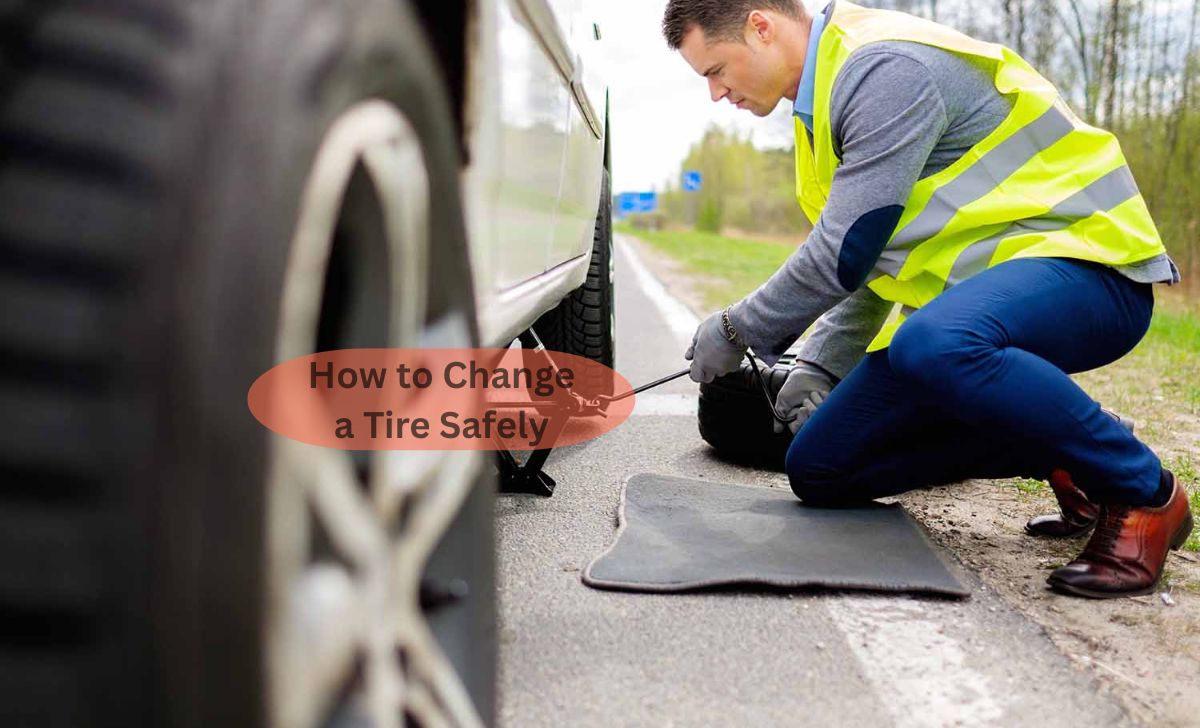
16 Dec How to Change a Tire Safely – and Confidently on Any Road
Knowing how to change a tire is an essential skill that every driver should have, regardless of experience level. Flat tires can happen unexpectedly due to sharp objects, poor road conditions, or sudden pressure loss, often at the most inconvenient times. When this occurs, understanding the correct steps can help you stay calm, safe, and in control of the situation.
Instead of relying entirely on roadside assistance, learning this practical skill allows you to handle emergencies efficiently and confidently. This guide is designed to explain the process in a clear, human-friendly way, ensuring you can change a tire safely, avoid common mistakes, and get back on the road without unnecessary stress.
How to Change a Tire Safely with this step-by-step guide covering tools, precautions, and easy tips to avoid injuries and get back on the road fast.
Why Knowing How to Change a Tire Is an Essential Skill
Learning how to change a tire gives you independence and peace of mind. Instead of waiting hours for roadside assistance, you can get back on the road quickly. It also helps you avoid unsafe situations, especially if you are stranded in unfamiliar or poorly lit areas.
Beyond convenience, this skill can save money. Towing services and emergency help can be expensive, while changing a tire yourself costs nothing. Most importantly, knowing the correct process reduces the risk of injury or vehicle damage caused by mistakes or panic.
Situations When You May Need to Change a Tire
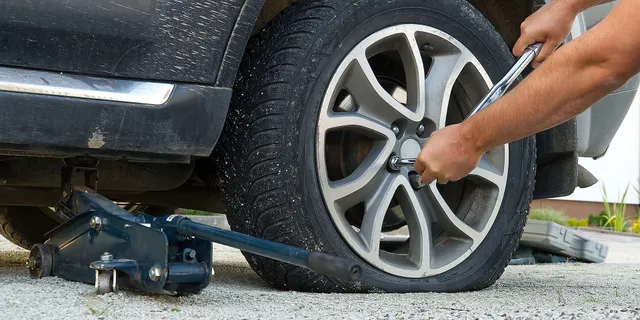
Flat Tire Emergencies on Highways
Highway flats are stressful because of traffic and noise. Sharp debris, potholes, or sudden pressure loss can leave you stranded. In these moments, knowing how to change a tire quickly and safely is critical to minimizing danger and getting out of harm’s way.
Slow Leaks and Sudden Pressure Loss
Not all tire problems happen instantly. A slow leak can worsen while driving, eventually making the car unsafe to operate. If pressure drops too low and no repair shop is nearby, changing the tire becomes necessary.
Rural or No-Service Area Breakdowns
In remote areas, phone signals and roadside assistance may not be available. Being prepared to change a tire on your own ensures you are not left waiting for help that may take hours to arrive.
Tools You Need Before Changing a Tire
- Spare Tire: A properly inflated spare is crucial to replace the damaged tire and get you back on the road safely.
- Jack: Used to lift the vehicle off the ground, allowing you to remove and install the tire securely.
- Lug Wrench: Helps loosen and tighten the lug nuts that hold the wheel in place.
- Wheel Chocks: Prevent the vehicle from rolling while you’re working, improving safety during the process.
- Flashlight or Phone Light: Provides visibility when changing a tire at night or in low-light conditions.
Safety Precautions to Take Before You Begin
Choosing a Safe and Stable Location
Always pull over to a flat, solid surface away from traffic. Avoid slopes, curves, or soft ground. Turn on hazard lights immediately so other drivers can see you.
Securing the Vehicle Properly
Engage the parking brake and place wheel wedges behind the tires opposite the flat. This prevents the vehicle from rolling while it is lifted.
Protecting Yourself During the Process
Stay alert and aware of your surroundings. Never put your body under the vehicle while it is supported by a jack. Wearing reflective clothing increases visibility, especially at night.
Step-by-Step Process to Change a Tire

Loosening the Lug Nuts Correctly
Before lifting the vehicle, use the lug wrench to loosen the lug nuts slightly. Turn them counterclockwise, but do not remove them yet. This prevents the wheel from spinning while elevated.
Lifting the Vehicle with a Jack
Place the jack at the manufacturer-recommended lifting point, usually near the tire frame. Slowly raise the vehicle until the flat tire is off the ground. Make sure the car feels stable before proceeding.
Removing the Flat Tire Safely
Once lifted, fully remove the lug nuts and carefully pull the tire straight toward you. Place it flat on the ground nearby to prevent rolling.
Installing and Tightening the Spare Tire
Align the spare tire with the wheel bolts and push it into place. Hand-tighten the lug nuts in a star pattern to ensure even pressure. This step is crucial for safety.
Lowering the Vehicle and Final Checks
Lower the car slowly until the spare tire touches the ground, then fully tighten the lug nuts. Once the vehicle is fully lowered, check the tightness again and ensure the spare is secure.
Common Mistakes People Make While Changing a Tire
- Not Securing the Vehicle Properly: Failing to engage the parking brake or use wheel chocks can cause the car to roll, creating a serious safety risk.
- Loosening Lug Nuts Too Late: Trying to loosen lug nuts after lifting the car makes the wheel spin and increases difficulty.
- Incorrect Jack Placement: Placing the jack on an unstable or wrong point can damage the vehicle or cause it to slip.
- Skipping Safety Visibility: Not using hazard lights or reflective gear reduces visibility and increases accident risk.
- Over-Tightening Lug Nuts: Applying excessive force can strip threads or make future tire removal difficult.
What to Do After Changing a Tire
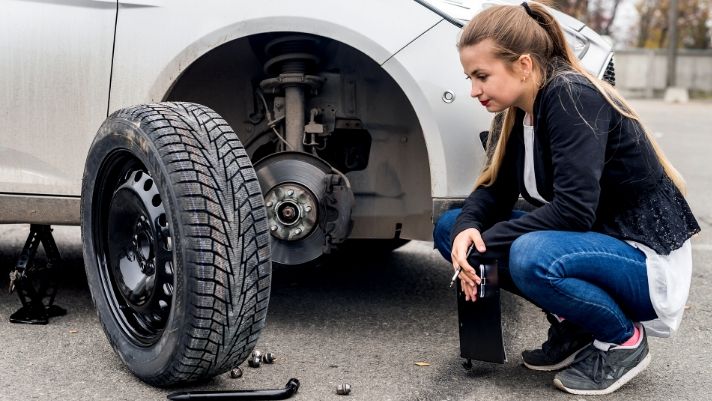
Driving Safely on a Spare Tire
Most spare tires are temporary and not designed for long distances or high speeds. Drive slowly, avoid highways if possible, and head straight to a repair shop.
When to Repair or Replace the Damaged Tire
Some flat tires can be repaired, while others require replacement. A professional inspection will determine whether the tire is safe to use again.
How Long It Takes to Change a Tire for Beginners
For beginners, changing a tire typically takes 20 to 30 minutes. With practice, this time can be reduced significantly. Familiarity with tools and steps makes the process smoother and less stressful.
Tips to Make Tire Changes Faster and Easier Next Time
- Practice at Home First: Changing a tire in a safe environment helps you remember the steps and builds confidence for real emergencies.
- Keep Tools Organized: Store your jack, wrench, and spare tire in one accessible place to save time during roadside situations.
- Check Spare Tire Regularly: Make sure your spare is properly inflated so you don’t face delays when you need it most.
- Use Wheel Chocks: Placing chocks or heavy objects behind tires improves safety and stability while changing the tire.
- Wear Gloves and Reflective Gear: Gloves protect your hands, and reflective vests increase visibility, especially at night or on busy roads.
When You Should Call for Professional Help Instead
You should call for professional help instead of changing a tire yourself when the situation becomes unsafe or beyond your skill level. If the tire is badly damaged, the rim is bent, or the wheel refuses to loosen, forcing it can cause injury or further damage.
Professional help is also necessary when you are stuck on a busy road, uneven ground, or in poor visibility. Lack of proper tools, physical limitations, or extreme weather conditions can turn a simple tire change into a dangerous task.
FAQ
1. What Is the Safest Way to Change a Tire?
The safest way to change a tire is parking on a flat surface, using hazard lights, applying the parking brake, and placing wheel wedges before lifting the car.
2. How Long Does It Take to Change a Tire?
How to Change a Tire usually takes 15 to 30 minutes if tools are ready and steps are followed carefully, even for beginners.
3. What Tools Are Needed to Change a Tire?
How to Change a Tire requires a jack, lug wrench, spare tire, wheel wedges, flashlight, and gloves to ensure safety and smooth tire replacement.
4. Can I Change a Tire Without Professional Help?
How to Change a Tire can be done without professional help if you understand the steps, have proper tools, and feel confident handling basic car maintenance safely.
5. When Should I Call a Professional for Tire Change?
How to Change a Tire may require professional help if you are on a busy road, lack tools, have damaged lug nuts, or feel unsafe changing it yourself.
Conclusion
Learning how to change a tire is a practical skill that prepares you for unexpected situations. With the right tools, safety precautions, and step-by-step knowledge, you can handle a flat tire confidently. Being prepared not only saves time and money but also keeps you safe on the road.
Related Post