

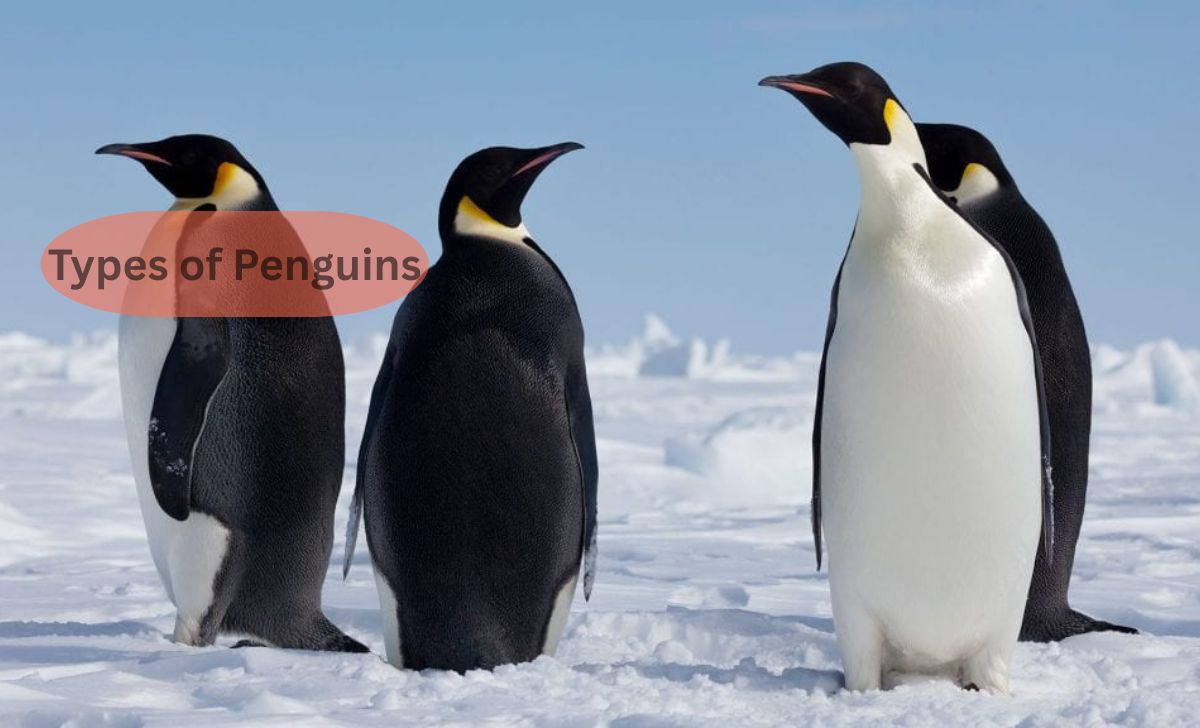
11 Dec Types of Penguins – Complete Guide to All Penguin Species & Facts
Penguins are one of the most fascinating and beloved birds in the world. Known for their unique waddling walk, aquatic skills, and social behaviors, they capture human curiosity like no other species. There are over 18 types of penguins, each with distinctive features, habitats, and survival strategies.
From the towering Emperor penguin to the agile Rockhopper, these birds showcase incredible diversity. Understanding the different penguin species helps us appreciate their role in ecosystems and highlights the importance of protecting their environments. This guide explores all major types of penguins, their characteristics, and fascinating facts.
Types of penguins guide covering all species habitats diets and facts. Learn about these unique birds and why protecting them is crucial.
What Makes Penguins Unique Among Birds
Penguins are one of the most fascinating bird species. Unlike other birds, they are flightless but exceptional swimmers. Their bodies are perfectly adapted to aquatic life, featuring streamlined shapes, strong flippers, and dense waterproof feathers.
Penguins thrive in extreme environments, from icy Antarctica to temperate islands. Their social behavior, group dynamics, and unique waddling walk make them highly recognizable and adored worldwide.
How Penguins Adapt to Extreme Environments
Adaptation is key to penguin survival. Species living in harsh climates, such as the Emperor penguin, endure freezing temperatures using thick blubber and layered feathers. In warmer climates, penguins rely on burrows and shaded areas to avoid heat.
Each penguin species has evolved to optimize hunting, breeding, and nesting based on its habitat, which helps explain the wide diversity among the “types of penguins.”
Exploring the Emperor Penguin
Key Physical Traits of the Emperor Penguin
The Emperor penguin is the largest penguin species, standing nearly four feet tall. They are easily identified by their black heads, white bellies, and bright yellow-orange patches on their necks. Strong legs, webbed feet, and flipper-like wings allow them to navigate icy waters efficiently. This species has remarkable endurance, surviving the harsh Antarctic winters to breed and raise chicks.
Life in the Antarctic – Habitat and Behavior
Emperor penguins live exclusively in Antarctica. They breed during the coldest months, enduring temperatures as low as -60°C. Their social behavior is highly cooperative; males huddle together for warmth while incubating eggs. They rely on fish, krill, and squid for nutrition, often traveling long distances to find food. These adaptations make them one of the most resilient “types of penguins.”
All About the King Penguin
Distinctive Appearance and Size
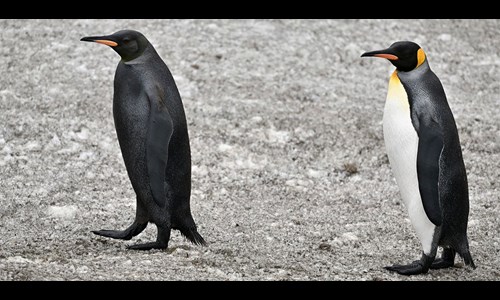
King penguins are the second-largest species, slightly smaller than Emperors. Their striking orange patches on the head and chest make them easily recognizable. They have long, slender bodies and a strong, upright posture. This species’ elegance and size distinguish them from other penguins, offering a stunning example of nature’s diversity.
Daily Life and Feeding Patterns
King penguins feed primarily on small fish and squid, often diving hundreds of feet underwater. They breed in large colonies, forming intricate social networks. Unlike Emperor penguins, King penguins have longer breeding cycles and take care of their chicks for extended periods. Their foraging techniques and cooperative lifestyle showcase how adaptable penguins can be.
Understanding the Adélie Penguin
Identifying Features and Personality
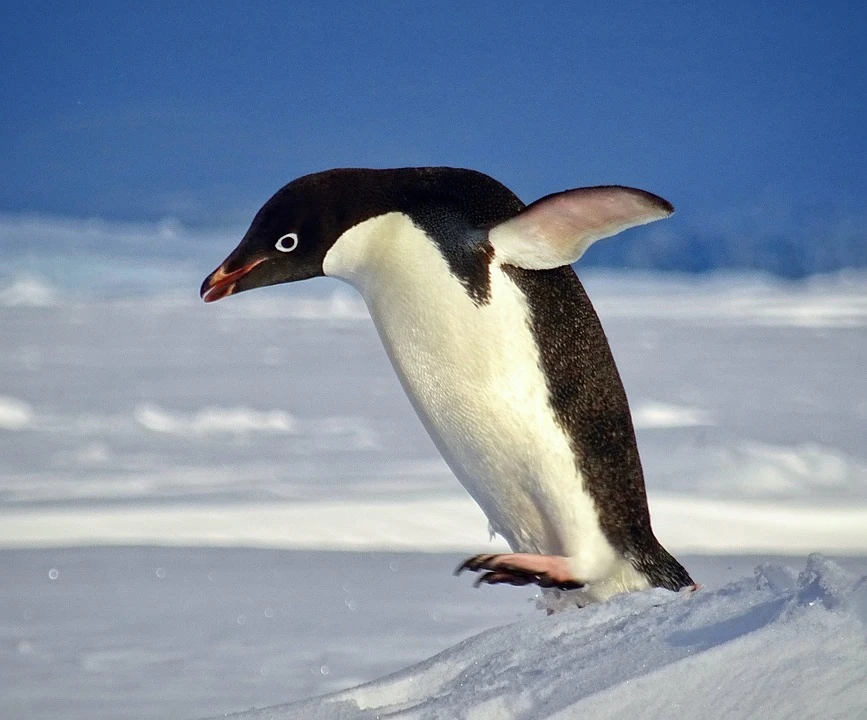
Adélie penguins are smaller and rounder than Emperors or Kings. They are black-and-white with a distinctive white ring around their eyes. Known for their curious and playful personalities, Adélie penguins are often seen interacting energetically within their colonies. Their active nature helps them thrive despite harsh environmental conditions.
Reproduction and Nesting Habits
Adélie penguins build simple nests from pebbles, carefully selecting stones to protect eggs from freezing surfaces. Both parents share incubation duties. Chicks stay close to adults for warmth and protection. This species’ communal nesting habits and shared parenting illustrate the importance of social structures among “types of penguins.”
Gentoo Penguin Characteristics
Recognizing Traits and Unique Markings
Gentoo penguins are easily identifiable by the wide white stripe extending like a bonnet across the top of their heads. They have bright orange beaks and feet, making them striking against snow and rocky terrains. Medium-sized and agile, Gentoos are excellent swimmers and can reach impressive speeds underwater.
Food Choices and Foraging Behavior
Gentoo penguins mainly feed on krill, fish, and squid. Their hunting techniques involve fast, agile swimming, often diving up to 200 feet to catch prey. Unlike more solitary species, Gentoo penguins forage in groups, showing social cooperation. Their feeding efficiency is a key factor in their survival and reproduction success.
Meet the Chinstrap Penguin
How to Identify This Species Easily
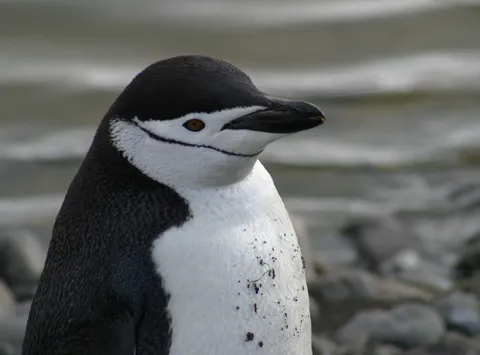
Chinstrap penguins are named for the thin black line under their chins, giving the appearance of wearing a helmet strap. Small and aggressive, they are highly territorial during breeding season. Their bold personalities and distinctive markings make them one of the easiest species to recognize in the wild.
Social Habits and Group Dynamics
Chinstraps are highly social and breed in massive colonies on rocky shores. They communicate through loud calls and body movements, establishing dominance and protecting territory. Their strong group cohesion helps protect against predators and ensures successful rearing of chicks.
Fascinating Macaroni Penguin
Iconic Yellow Crest and Its Purpose
Macaroni penguins have bright yellow crest feathers above their eyes, used for courtship displays. Medium-sized with orange beaks, their vibrant colors stand out among penguin species. Their crests signal health and fitness to potential mates, playing a crucial role in reproduction.
Lifestyle, Diet, and Behavior
Macaroni penguins primarily feed on krill, supplemented by fish and squid. They breed in large, noisy colonies, often on steep cliffs. Their agility on land and skillful swimming underwater make them efficient hunters. These behaviors reflect the adaptability and survival strategies unique to this species.
The Rockhopper Penguin’s World
Physical Features That Stand Out
Rockhopper penguins are small with spiky yellow crests, red eyes, and strong legs adapted for hopping over rocky terrain. Their unique appearance sets them apart from other penguins, combining agility with striking coloration.
Hopping and Climbing Skills in Nature
As their name suggests, Rockhoppers navigate rocky coastlines by hopping from boulder to boulder. This agility helps them evade predators and reach nesting sites inaccessible to others. Their energy and resilience make them a fascinating study among “types of penguins.”
Lesser-Known Penguin Species to Explore
Unique Traits of Rare Penguins
Species like the Little Blue, Fiordland, and Snares penguins are lesser-known but equally remarkable. They have distinct colors, sizes, and adaptations suited to specific environments, adding diversity to penguin populations worldwide.
Conservation Status and Protection Efforts
Many lesser-known penguins face threats from climate change, overfishing, and habitat destruction. Conservation organizations monitor populations, enforce protective laws, and rehabilitate injured birds. Awareness and action are crucial to ensure these species survive for future generations.
FAQ
1: What are the types of penguins?
There are over 18 penguin species, including Emperor, King, Adélie, Gentoo, Chinstrap, Macaroni, and Rockhopper, each with unique traits and habitats.
2: Where do penguins live?
Penguins are found in the Southern Hemisphere, mainly in Antarctica, sub-Antarctic islands, South America, Africa, Australia, and New Zealand, adapting to diverse climates.
3: Which penguin is the largest?
The Emperor penguin is the largest, standing nearly four feet tall, weighing up to 90 pounds, and surviving extreme Antarctic temperatures.
4: What do penguins eat?
Penguins primarily eat fish, krill, squid, and crustaceans. Diet varies by species and availability, with most hunting in oceans near their nesting sites.
5: How can we protect penguins?
We can protect penguins by supporting conservation programs, preventing habitat destruction, promoting sustainable fishing, reducing plastic waste, and raising awareness globally.
Conclusion
Penguins are extraordinary creatures with remarkable diversity, behavior, and adaptability. From towering Emperors to agile Rockhoppers, each species shows unique traits and survival strategies. Understanding the types of penguins helps us appreciate their role in ecosystems and emphasizes the importance of protecting their habitats for generations to come.
Must Read