

16 Sep 3 Types of Lasers Used to Remove Tattoos
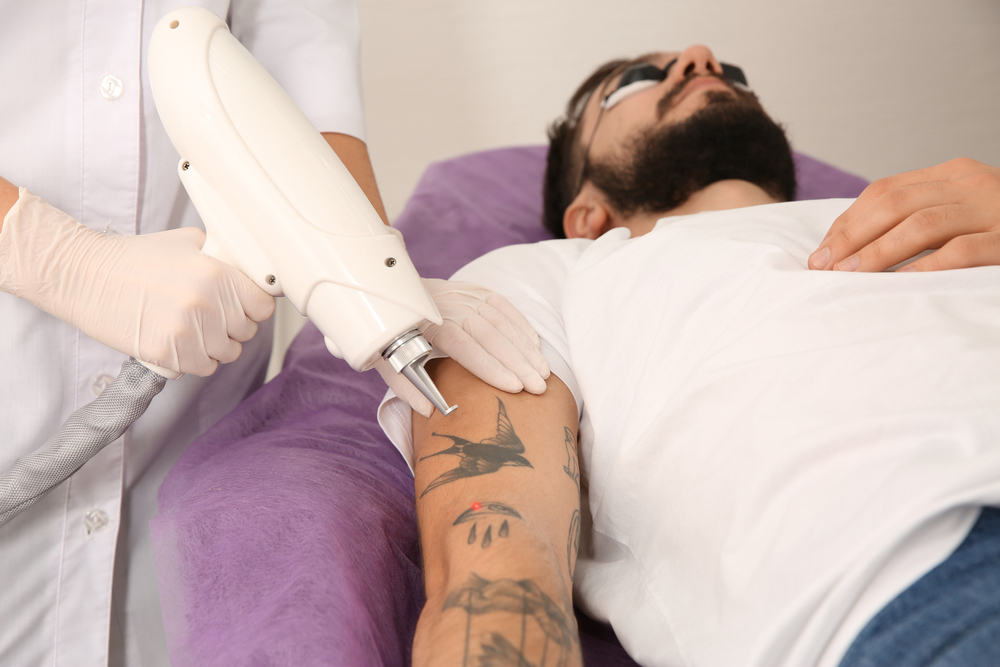
Tattoo removal technology has evolved, offering different methods to fade unwanted ink. Typical approaches use lasers to target the pigment in the skin, breaking down the large ink particles into smaller fragments. Your body’s natural processes then work to clear these smaller particles away over time. Here are some different types of lasers used in tattoo removal:
1. Q-switch Lasers
Q-switched, or quality-switched, lasers are a fundamental technology in tattoo removal. These devices produce very brief, high-energy pulses of light. The duration of these pulses is measured in nanoseconds, which is one-billionth of a second. This rapid burst of energy is absorbed by the tattoo ink particles, causing them to heat up and shatter into smaller pieces.
There are different kinds of Q-switched lasers, each using a specific wavelength of light to target certain ink colors. The selection of the specific Q-switched laser depends on the colors present in the tattoo. The treatment process with these lasers typically involves multiple sessions spaced several weeks apart, allowing the skin to heal and the body to clear the ink particles.
2. Picosecond Lasers
Picosecond lasers represent a newer advancement in tattoo removal technology. These lasers deliver energy pulses that are even faster than Q-switched lasers, measured in picoseconds, or one-trillionth of a second. The extremely short pulse duration creates a photomechanical effect, which is like a strong pressure wave that breaks the ink particles apart.
This method shatters the ink into even smaller, dust-like particles compared to the fragments created by nanosecond lasers. The theory is that these smaller particles are easier for the body to process and eliminate. Picosecond lasers are effective on a wide spectrum of colors, including stubborn blue and green inks, as well as black ink.
Like other laser treatments, a series of sessions is typically needed to achieve the desired fading of the tattoo. This advanced technology is used due to its efficiency and precision. It normally results in less discomfort and faster recovery times compared to traditional laser treatments.
3. Laser Combinations
In some tattoo removal cases, a technician may use a combination of different laser types. This approach may be taken when a tattoo contains multiple colors. A single laser might not be optimal for targeting every shade of ink present in a complex, multicolored piece. A tattoo might have black outlines with vibrant red, blue, and green fills.
Combining nanosecond and picosecond technologies is another strategy. A technician might start with a Q-switched laser to break down the bulk of the ink and then use a picosecond laser in later sessions to clear the remaining smaller particles. This combined approach enables a tailored treatment plan that addresses the unique characteristics of an individual’s tattoo.
Schedule Laser Tattoo Removal Today
Understanding the different lasers used for tattoo removal can help you be more informed as you begin your journey. Each type of laser offers a unique way to address tattoo ink, and the right approach will depend on your specific tattoo. If you are ready to discuss your options, reach out to a qualified professional. Contact a dermatologist to schedule a consultation and learn more about the process.
- Digital Fairways Lawsuit – Full Breakdown of Allegations, Timeline & What Victims Must Know
- Tuna Noodle Casserole – Easy, Creamy & Delicious Family Recipe
- Claude Edward Elkins Jr – From Brakeman to Norfolk Southern Executive Leader
- Motley Crue Members – Complete Guide to Band Lineup, Roles, and History
- Lotus Flower – Meaning, Symbolism, and Uses Explained